Fundamentals of Realistic De-escalation - Rockford
Alert
Registrations are closed for this event
Fundamentals of Realistic De-escalation - Rockford
Members' Fee: $0
Sworn Non-Members' Fee: $0
Non-Members' Fee: $0
DOWNLOAD FILE
Date: Thursday, March 12, 2026
Registration Deadline: Monday, February 16, 2026
Time: 8:00 AM - 4:00 PM
Registration Deadline: Monday, February 16, 2026
Time: 8:00 AM - 4:00 PM
Instructor Location:
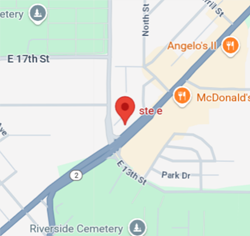
NITAB Training Room
Instructor: Nicole FlorisiNITAB Training Room
527 Colman Center Drive
Rockford, IL 61108
Rockford, IL 61108
Members' Fee: $0
Sworn Non-Members' Fee: $0
Non-Members' Fee: $0
DOWNLOAD FILE
Law enforcement agencies have come under intense pressure in recent years to prioritize their efforts at "de-escalation." We will discuss the often-challenging expectations of law enforcement professionals to gain compliance without using physical force and how oftentimes, this may not be realistic or safe. The legitimate goal of de-escalation tactics is to resolve problems with minimal harm. This distinction is critical. The course will present law enforcement concepts and methods to support de-escalation efforts. Attendees will be provided with knowledge to apply core skills of incident stabilization, tactics and decision-making and verbal and non-verbal skills to establish contact, build rapport and create influence with difficult subjects.
Learning and Training Objectives: Students will learn a wide variety of skills during this course including:
- Articulate what 'de-escalation' actually means, what the objectives of de-escalation are, and in what situations de-escalation can and cannot be considered.
- Discuss the tactical principles of de-escalation, risk assessment and decision-making.
- Quickly evaluate an interaction to determine whether de-escalation efforts are reasonable to consider, tactically practical, and likely to be successful.
- Apply critical Force Science® concepts such as the "Response-ability Zone" and the "7 T's De- escalation Evaluation Model" to evaluate tactics that are needed or likely to be successful in supporting a de-escalation process.
- Enhance their ability to make a connection, establish rapport and apply effective principles of persuasion with difficult subjects, including mentally ill subjects, through the application of the ‘Behavioral Influence Stairway Model.
- Learn and apply the 'Though Emotion/Behavior' (TEB) Matrix to quickly recognize whether a subject is in 'conflict', 'crisis' or has 'contaminated' thinking and therefore which strategies of persuasion are likely to be the most effective.
- Employ specialized questions specifically designed to cognitively engage individuals in crisis and increase the likelihood of resolution that either avoids force or minimizes the amount necessary to obtain control.
- Better ensure that officers' approach and control strategies maximize their response options while minimizing the potential for unnecessary emotional and/or physical escalation.
- Balance the desirability of trying to resolve a conflict peacefully with the need to maintain officer and public safety.
- Apply principles of officer self-regulation and emotional control in order to maintain rational thinking processes.
- Help community members and the media better understand what realistic de-escalation entails and the challenges that subjects may present that can inhibit, if not prohibit, an officer's ability to safely de-escalate.
This course has been certified by the ILETSB and approved to meet the following mandates:
- De-Escalation Techniques - 6.0 hours / 1.0 Hours scenario based
- Officer Safety - 1.0 hour
- Crisis Intervention - .50 hours